The Thing Economy: Three Business Models for the Future

Head of Innovation and Business Development, Institutional Clients Group, Citi
Global Innovation Lead for Treasury & Trade Solutions, Citi

ASIA Regional Lead, Citi Ventures ICG D10X

Head of Strategic Partnerships, Citi Ventures ICG D10X
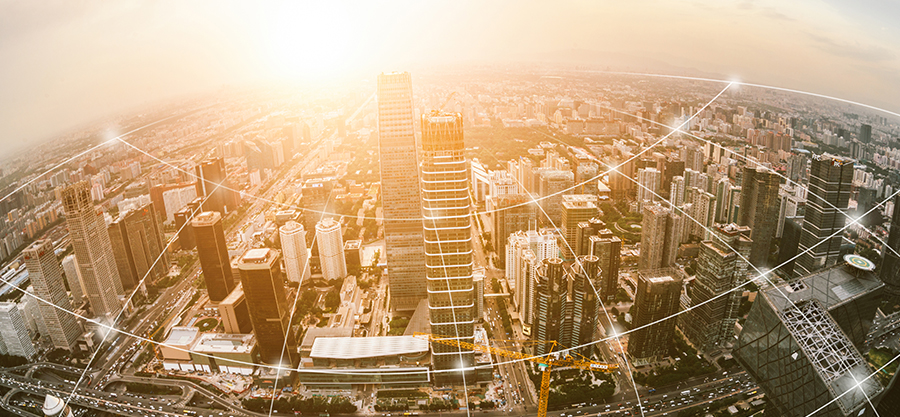
Driven by the ongoing growth of the Internet of Things (IoT) and advances in connectivity, automation, and data technology, a new era of physical objects behaving as autonomous financial actors is quickly approaching. Dubbed the "Thing Economy," this shift promises to spur the evolution of existing business models—and the creation of new ones—across a variety of industries.
What might these models look like? While the Thing Economy is in its early stages, three areas offer signals about its transformative potential.
1. Fractional Ownership
Fractional ownership—an investment structure in which several parties own small portions of an asset and share its risks and benefits—is not a new concept, having been applied to high-value assets such as vacation properties, aircraft, and sports teams. While intriguing, fractional ownership traditionally has required high levels of overhead while being difficult to coordinate, making it unattractive as a business proposition.
For example, the 1990s and early 2000s saw a boomlet of companies selling fractional shares of business jets. These firms promised individual shareholders both profit and the convenience of private flight. Yet by the end of the 2000s, customer growth plateaued and cash flows evaporated as the Great Recession took hold and shareholders realized that they were paying considerably more on a proportional basis to buy shares in an aircraft than they would to buy it outright.
By reducing overhead and improving coordination through automation, the Thing Economy could unlock the full potential of fractional ownership, enabling retail investors to purchase assets that previously were the province of institutional capital.
An example of this is a UK wind energy company that allows customers to purchase parts of wind farms to lower their utility bills and take a personal stake in clean power. The company funds and manages the construction of new turbines and sells ownership of 10-watt blocks to consumers, who receive electricity from the farms. As IoT technology matures, the power-generating turbines on wind farms could become individual, investment-grade assets with their own P&Ls and the ability to autonomously transact—ideal candidates, perhaps, for fractional ownership.
Similarly, a Belgian mission-driven fintech company is exploring fractional ownership of forests, which have not been viable mass-market investment products for two reasons: large tracts of land are prohibitively expensive, and costly monitoring requirements have eaten up yield. Through a blockchain-powered platform that allows people to buy and sell forest-backed tokens with minimal friction, the company aims to make forest ownership more accessible and liquid. In the future, connected devices such as drones and satellites could reduce forest monitoring costs, making them a more transparent and attractive option for retail investors
2. Extending the Value Chain
In the Thing Economy, both B2B and B2C companies likely will find new ways to use their existing physical assets to extend the value chain.
One example of this is a global supply company that has developed smart pallets for in-store promotional displays by manufacturers and retailers. Equipped with small sensors, the pallets can send personalized promotional messages and vouchers to nearby customers' smartphones, collect data about those customers, and even offer flash coupons to promote perishable goods nearing the end of their shelf life. In Germany, trials using the company's smart pallets have led to increased coupon usage and significant increases in new customers.
These smart pallets show how the Thing Economy can be used to leverage pre-existing B2C relationships in new and profitable ways. They also hint at how the Thing Economy may allow B2B firms to become B2B2C operations that sell products and services to other businesses while simultaneously gaining customers and data from that business. For example, a Swiss e-bike startup currently makes money by renting electric bicycles to individuals and corporate clients. However, the company's co-founder believes that it eventually could become a B2B2C business by receiving a cut of other transactions—such as hotel or restaurant bookings—recommended and tracked by the IoT technology on its bikes.
In the future, e-bikes, smart pallets, and other IoT objects with autonomous transaction capabilities could create entirely new B2B, B2C, and B2B2C ecosystems that look less like traditional commerce than online affiliate marketing and programmatic advertising.
3. The Circular Economy
From Citi's 2025 Sustainable Progress Strategy to "zero waste" plans in many U.S. cities, corporations and governments are embracing the "circular economy," which calls for creating production and consumption systems that are sustainable and inherently regenerative instead of wasteful and harmful to the planet.
A French cloud computing services company has an innovative, two-sided business model that leverages the Thing Economy to significantly lower the carbon footprint of computations. The firm manufactures computer servers that double as radiators and boilers with smart home features, using the waste heat they produce to warm rooms and water. Rather than house these servers together at traditional data centers—a practice that requires additional energy for cooling—the company sells them to office and residential buildings as heating units. People living or working in those buildings can use them for temperature control, while corporate clients can rent time on the same servers for their cloud-based computing needs.
In a Thing Economy, objects and devices will flag problems, determine when they need to be repaired, and schedule and pay for their own maintenance—all of which will reduce waste by making them easier to maintain. IoT and autonomous transaction capabilities also promise to transform items such as power tools, automobiles, and heavy farm equipment into sharable assets, which means fewer may need to be made.
Monitoring Signals of Opportunity
The specific business models that will emerge in the Thing Economy remain to be seen, as do the accompanying opportunities for financial institutions. However, it's not too early to monitor pioneering technology, concepts, and companies such as those discussed above, looking for signals that will indicate when and how financial institutions can play a beneficial role. Today's experiments are stepping-stones leading to where business will go next.
For more on the Thing Economy, click here.